Research
Mobile Manipulator for Rescue Operations
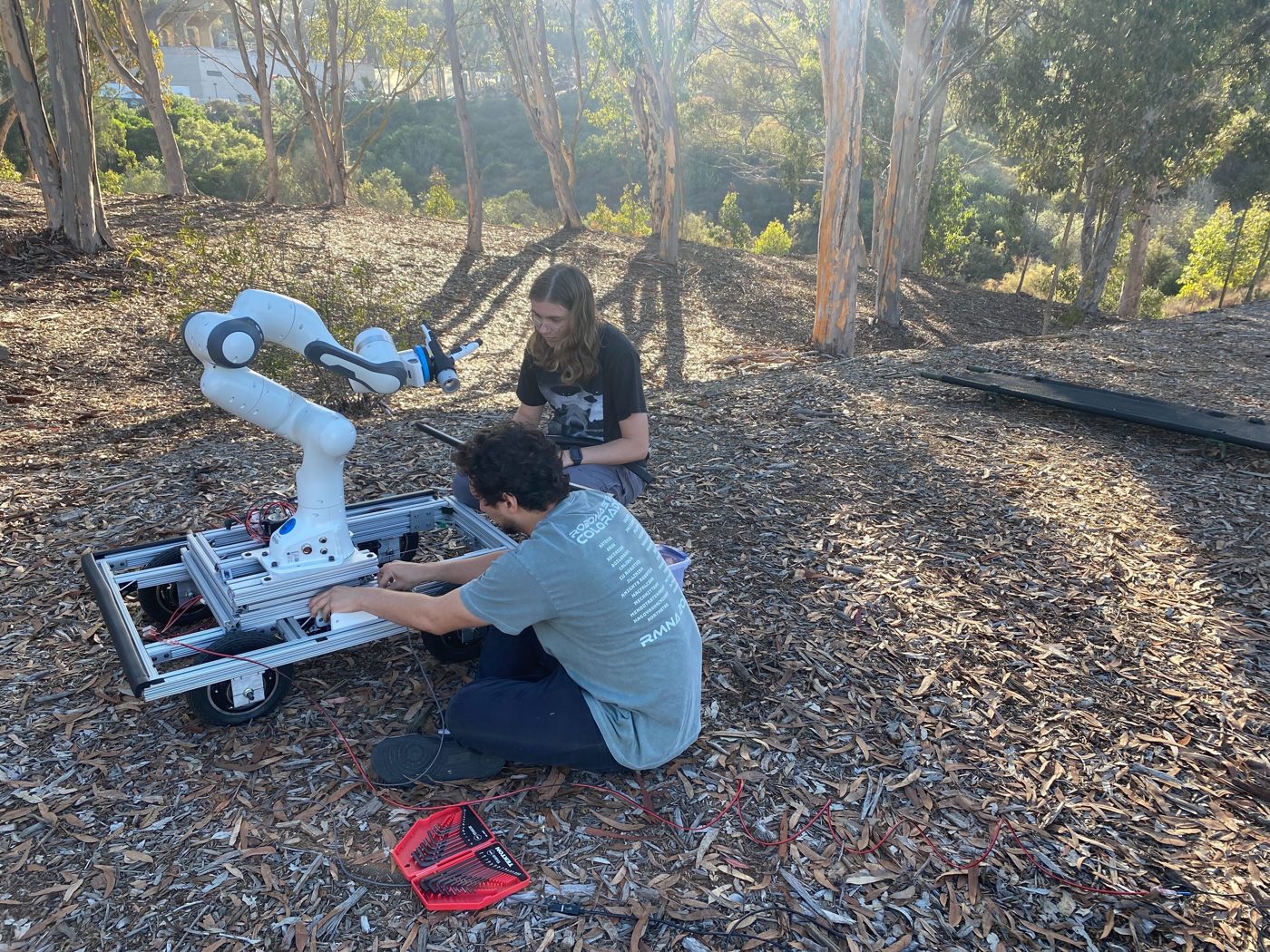
A mobile base carrying two Franka Panda arms, with an actively shifted center of mass for safe human extraction research.
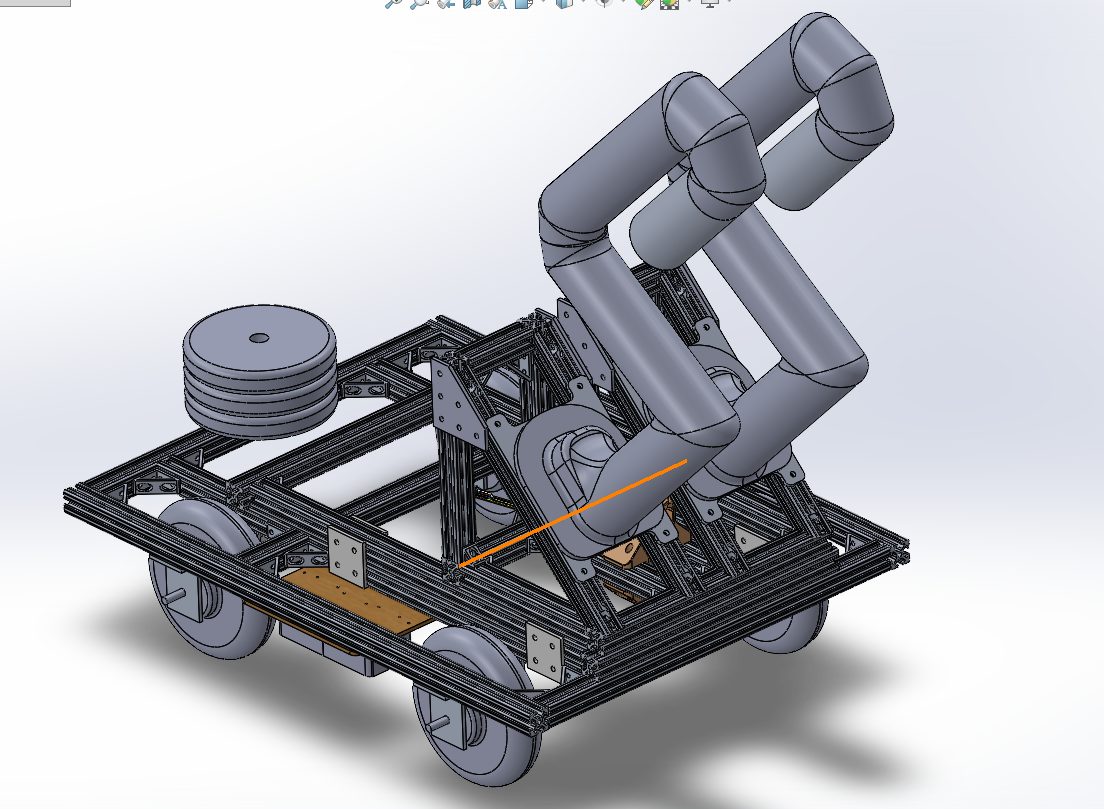
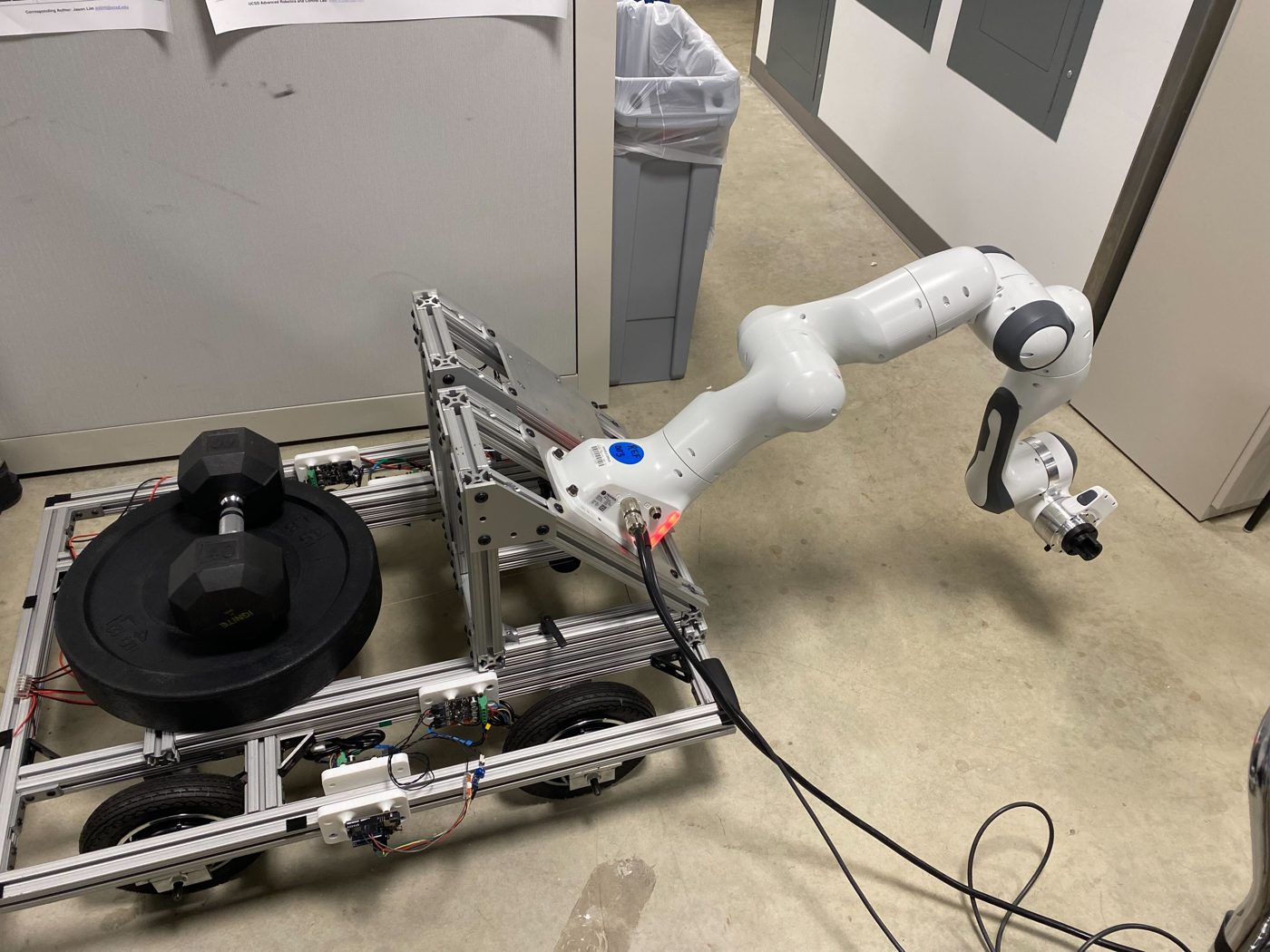
A capstan-driven stage moves the counterweight so two Franka arms (36 kg together) and a 10 kg payload stay balanced on a platform weighing roughly 117 to 142 kg.
My role. Structural frame, center-of-mass stage, and soft gripper design
SolidWorks / Ansys FEA / ODrive / BLDC / TPU printing
This platform is a testbed for studying how a robot can safely handle and extract a person in a rescue scenario. I built the base that carries the two arms, an active stage that moves the center of mass as loads shift, and a soft gripper for touching human limbs.
The frame
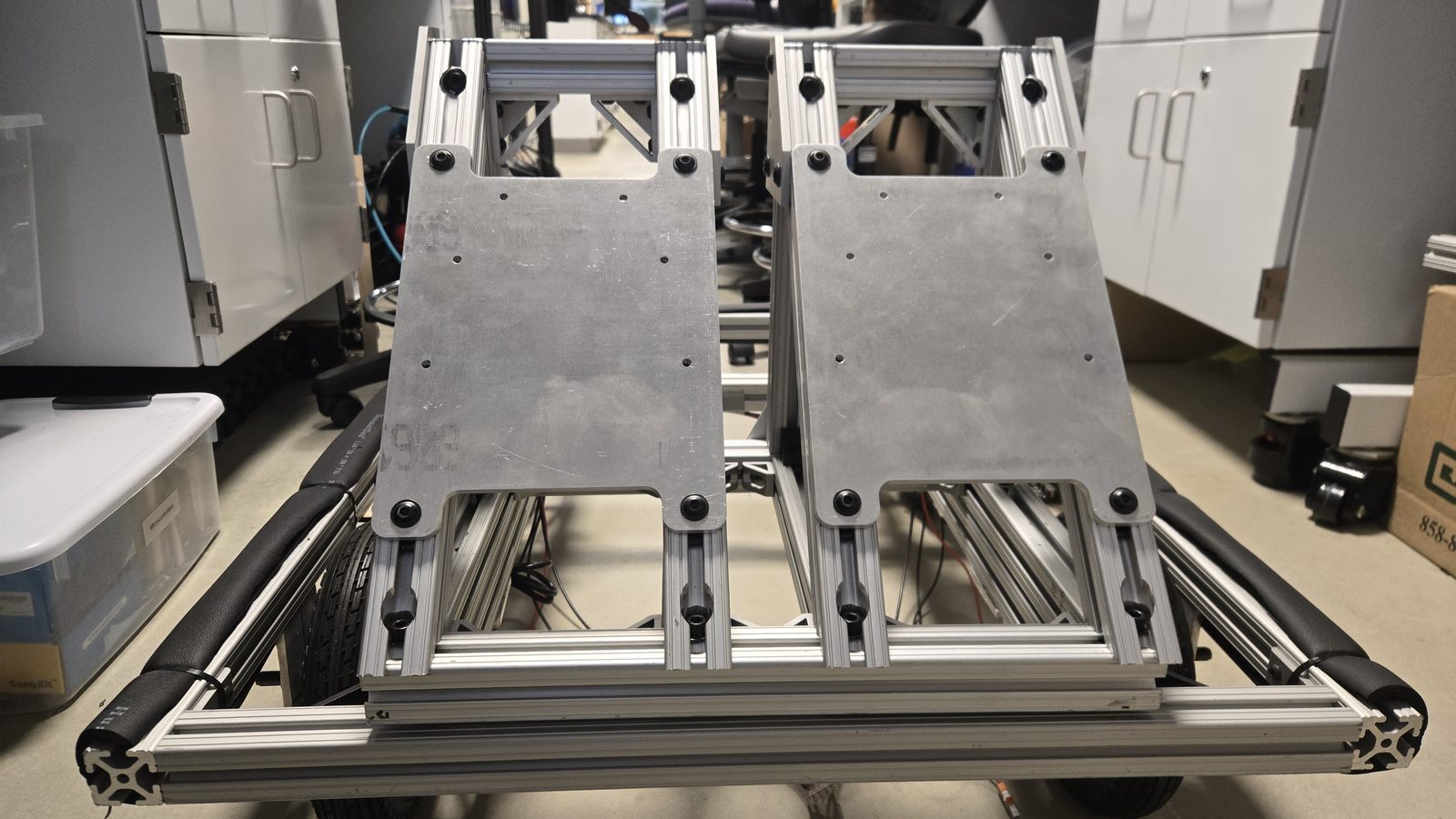
The chassis is aluminum extrusion, so the lab can modify it and rebuild test setups quickly. I used FEA to check stiffness and stress under uneven, dynamic loads and removed material that wasn’t doing work.
The arms are heavy and reach out over the front, so balance sets the design:
- Arms and payload: about 46 kg together.
- Frame: 30 to 35 kg.
- Counterweight: two or three 45 lb plates (40.8 or 61.2 kg) to keep the center of mass between the wheels.
- Transport mode: arms curl in and counterweights come off, in minutes.
The wheels are driven by off-the-shelf electric scooter hub motors.
Moving the center of mass
Instead of carrying that mass fixed, I designed a capstan-driven linear stage that moves the counterweight during operation. A BLDC motor on an ODrive controller runs it in position control.
Load-shift tests showed repeatable center-of-mass adjustment with smooth motion and no backdriving.
A gentler gripper
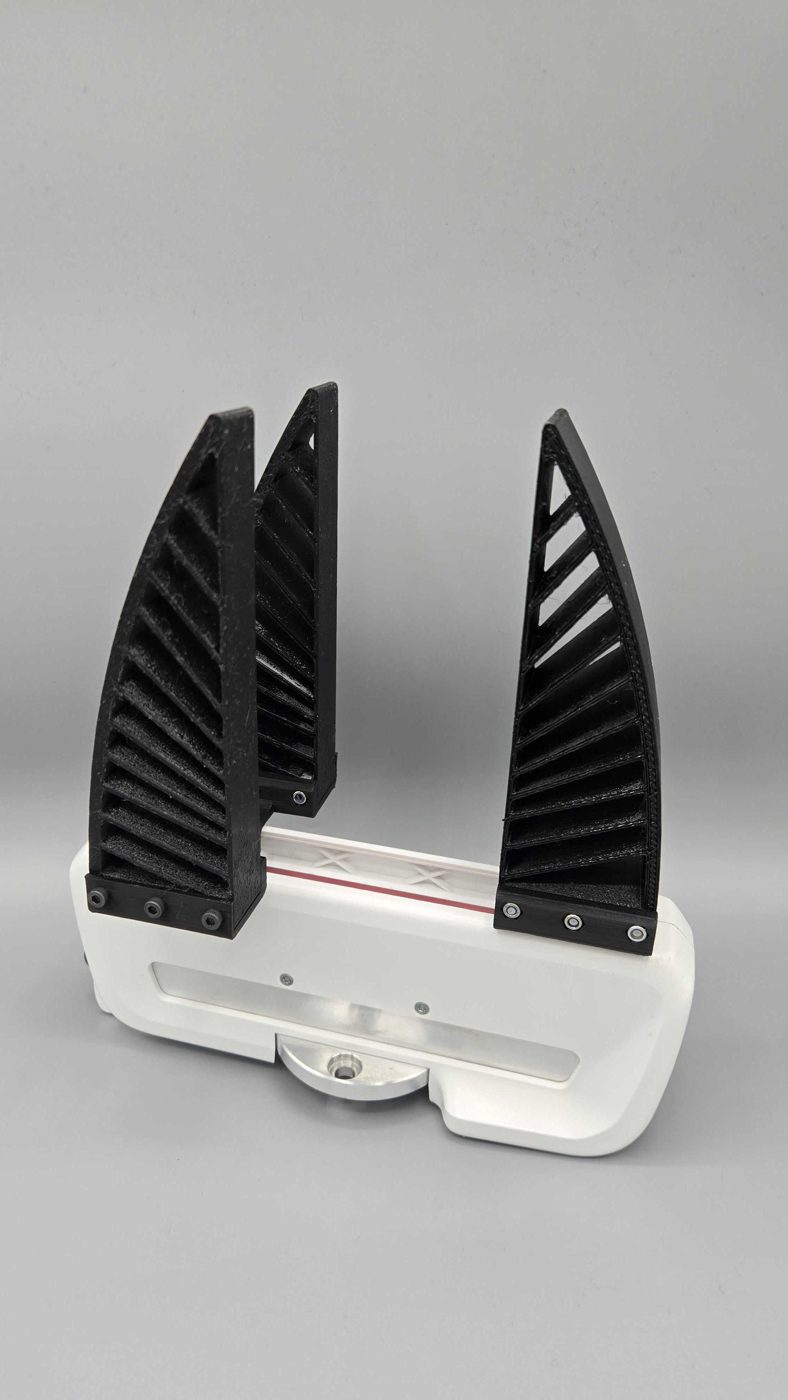
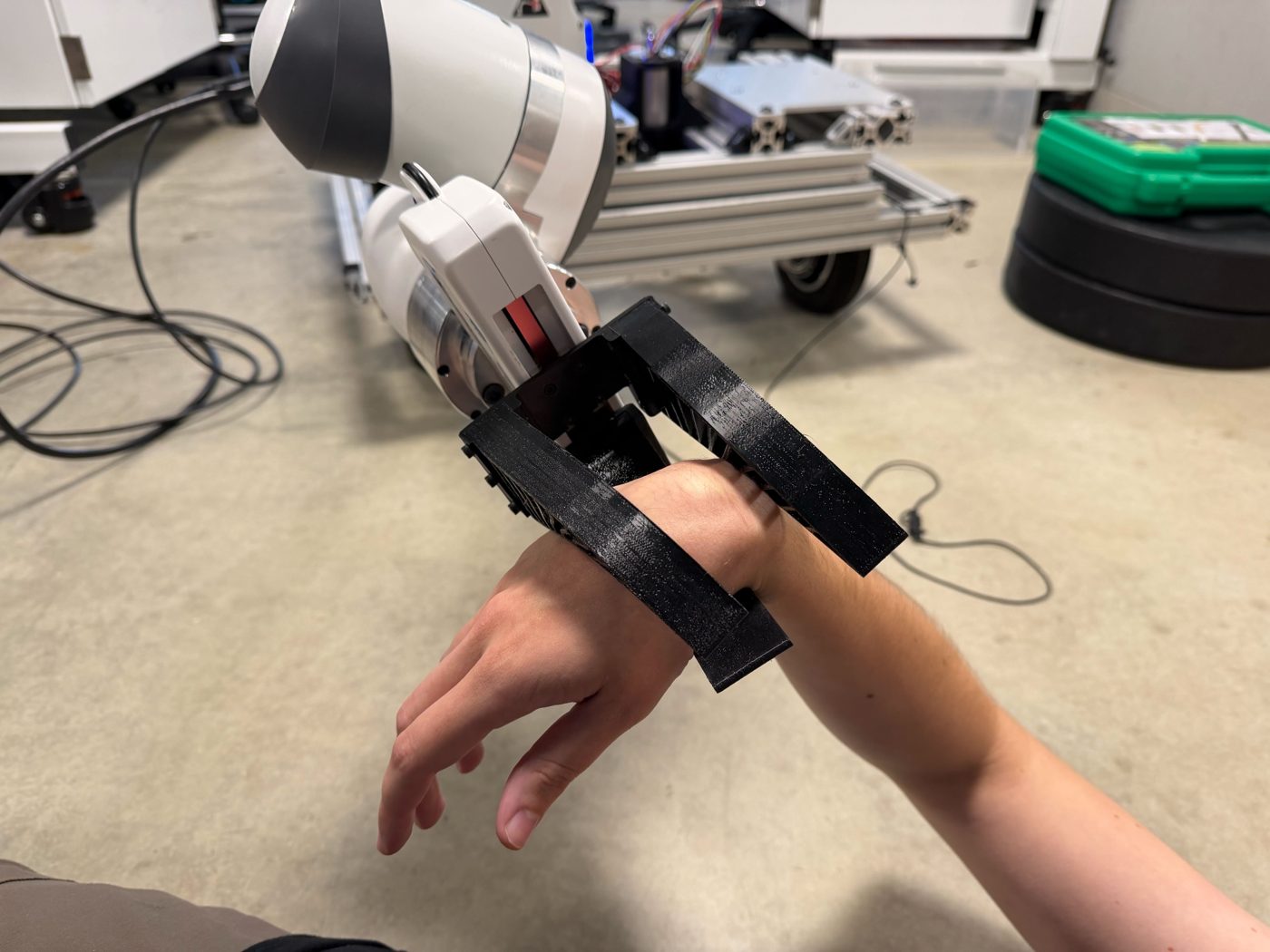
The lab’s commercial hand was too heavy for the Panda arm, and its grip was too strong for physical contact with a person.
I designed a lightweight fin-ray-effect TPU gripper instead. The fins conform to a limb rather than concentrating force at a few points.
Out in the field
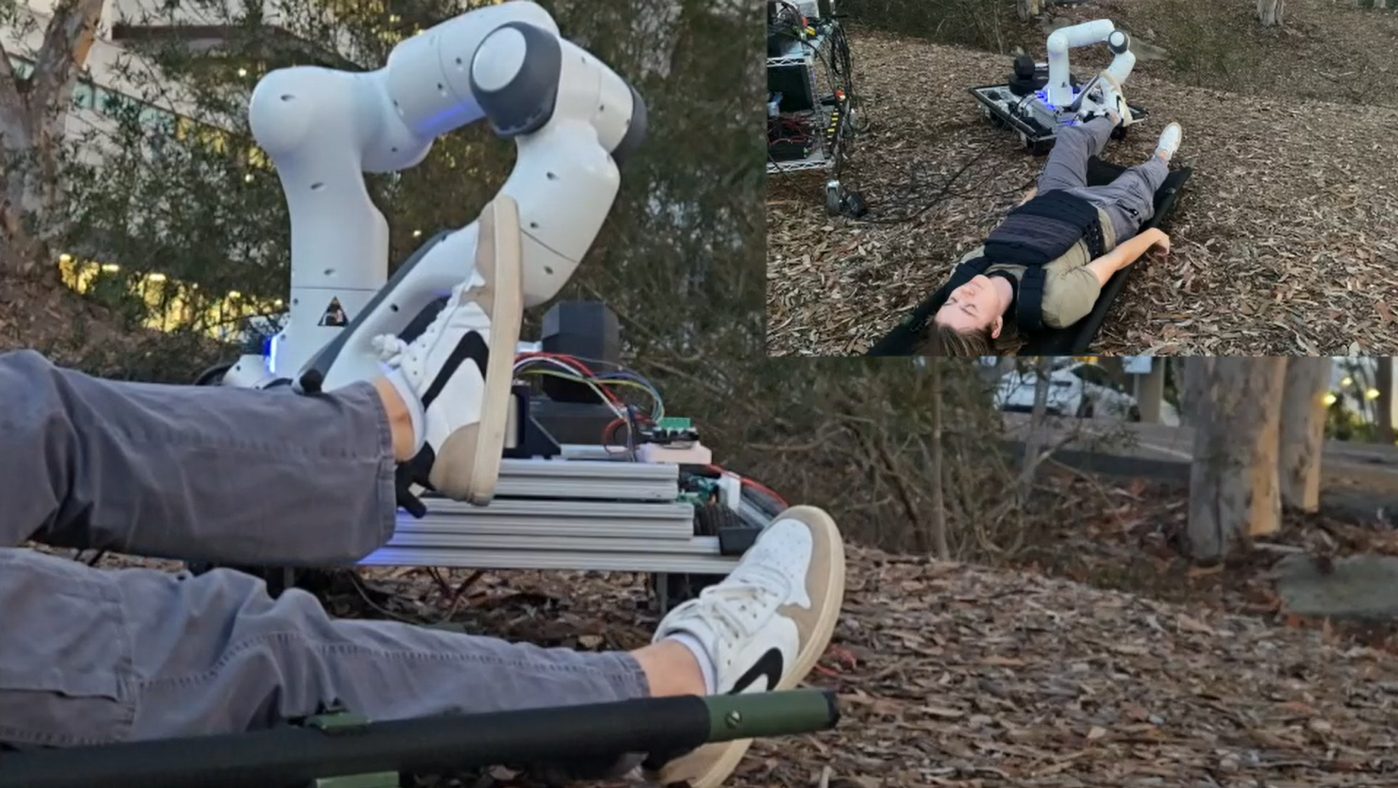
We took the platform outdoors onto uneven, loose ground, with the arms positioned over a volunteer on a stretcher.
This work supports a labmate’s research on safe physical human-robot interaction during rescue manipulation.