Course project
Particle-Jamming Limb Stabilization
A vacuum-tunable particle-jamming interface for stabilizing a limb quickly in the field, tested against strap splints.
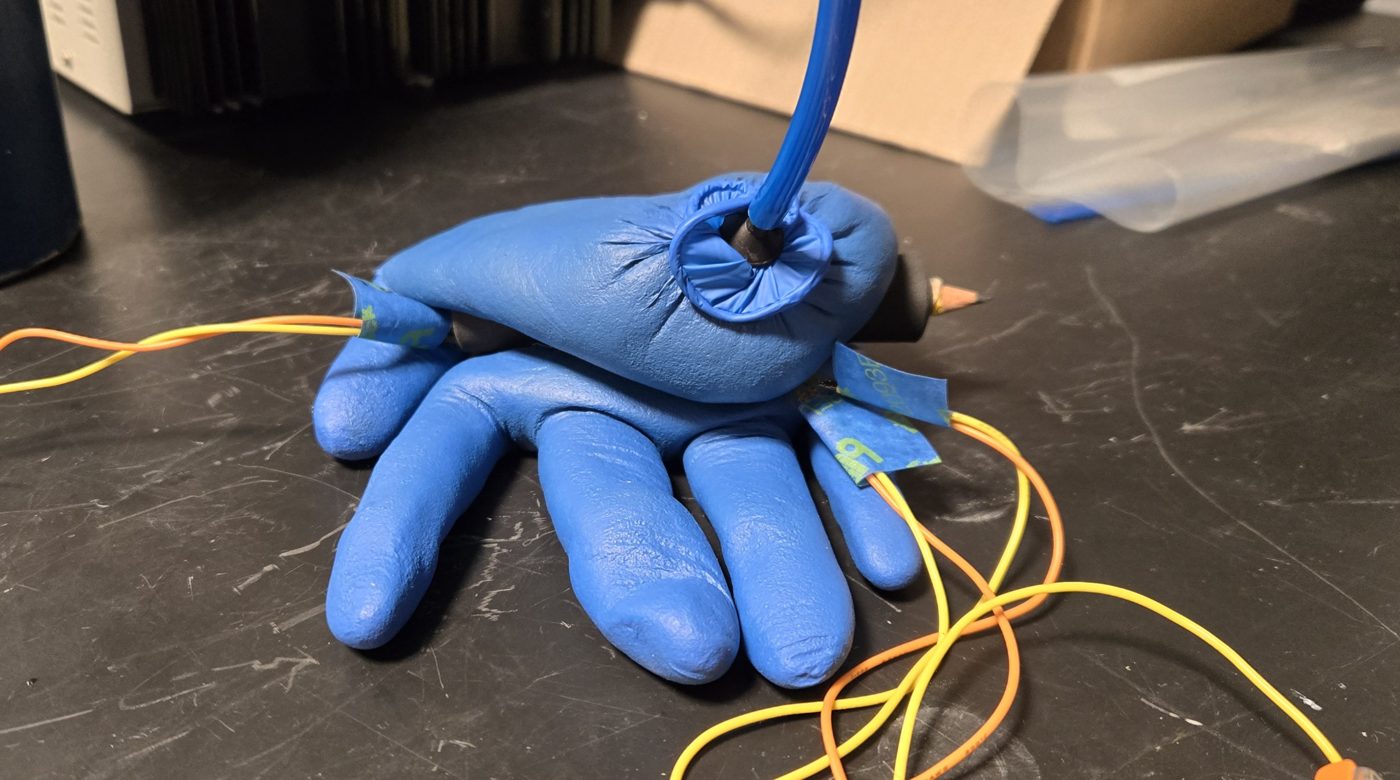
The jamming pad took 1.6 to 4 times the pull-out force of a strap splint.
My role. Solo project, from design through testing
Vacuum pneumatics / FSR arrays / Arduino / MATLAB
Field responders often have to stabilize an injured limb in an awkward position among debris. Straps and rigid splints concentrate pressure on bony or swollen spots, which hurts and risks more injury.
Particle jamming is another route. Granular material in a flexible membrane is soft and conforms to any shape. Pull a vacuum and it locks rigid in that shape.
The prototype
I built it from what was in the lab:
- a blue nitrile glove filled with coffee grounds,
- the lab’s vacuum line, on or off at about 25 inHg (no regulation),
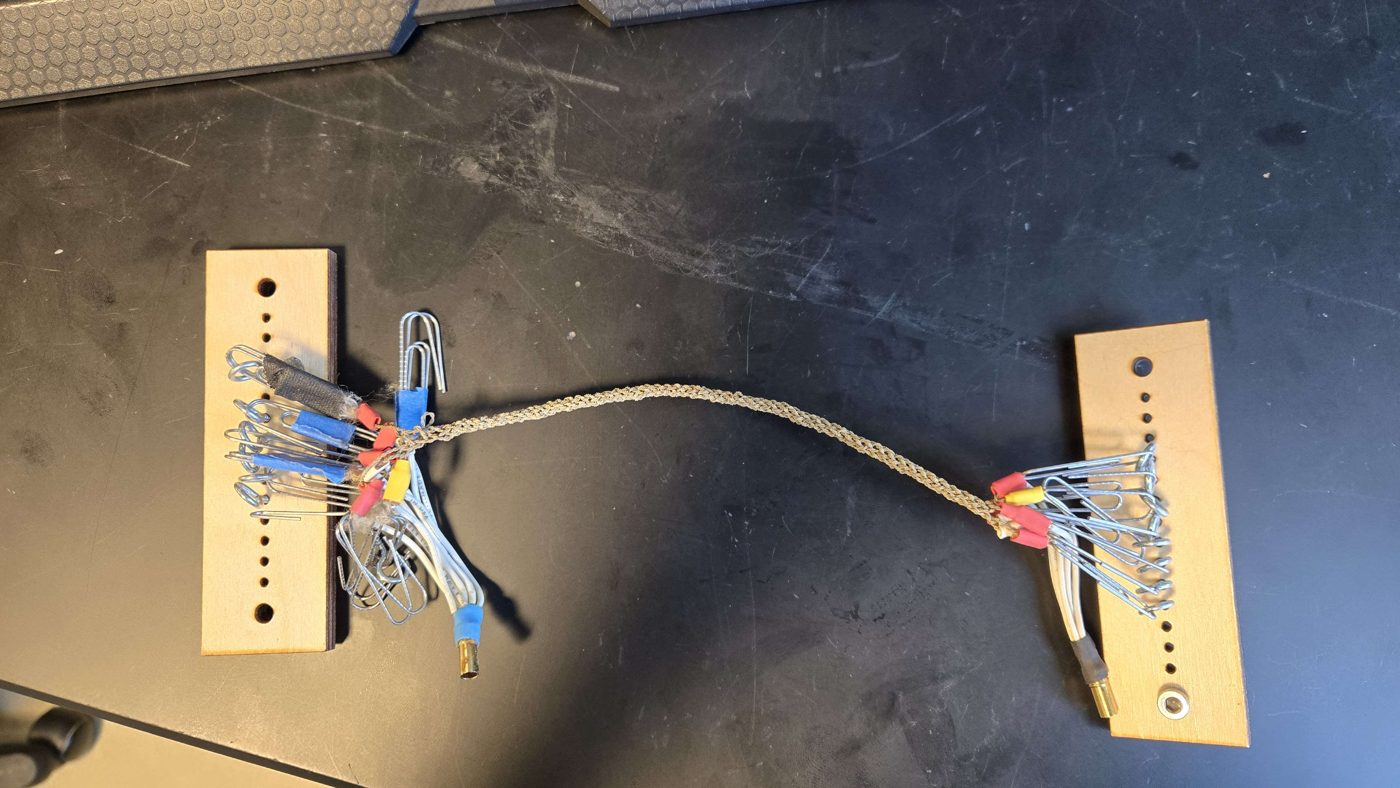
- a limb surrogate: a foam-wrapped pencil standing in for flesh and bone,
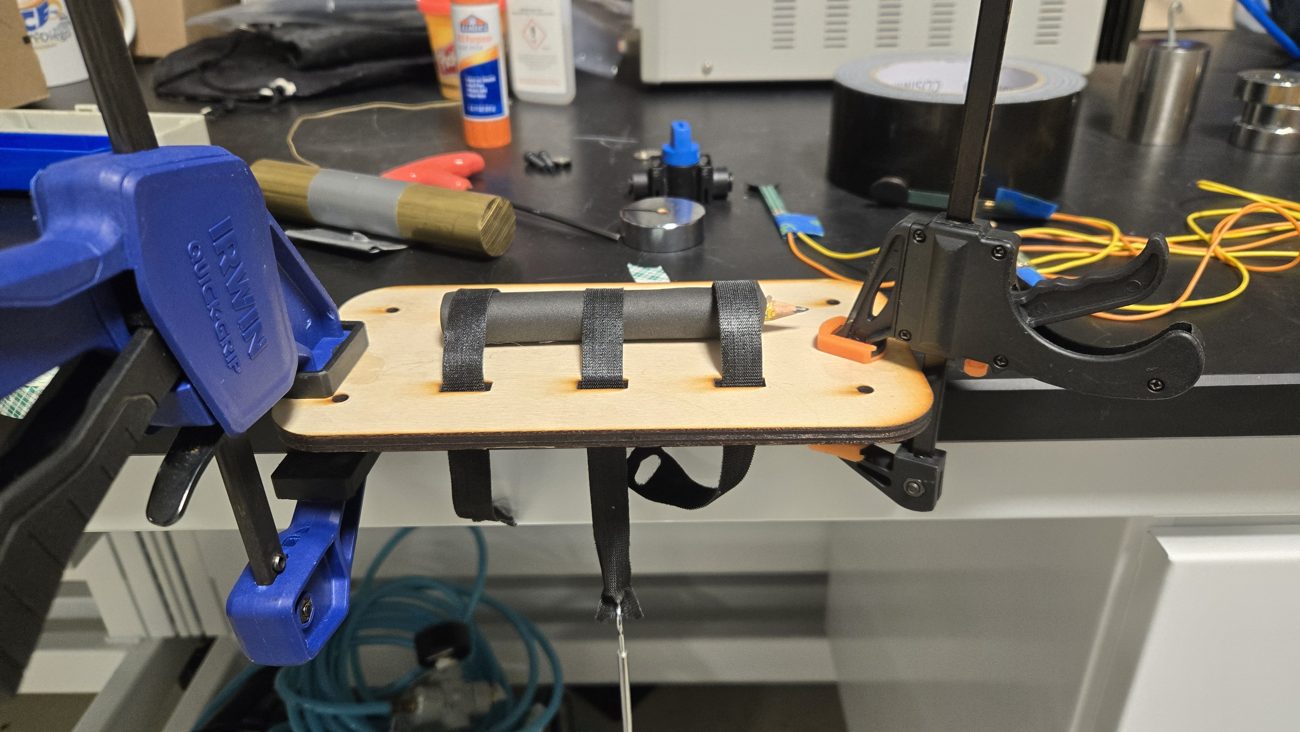
- a three-strap splint as the baseline.
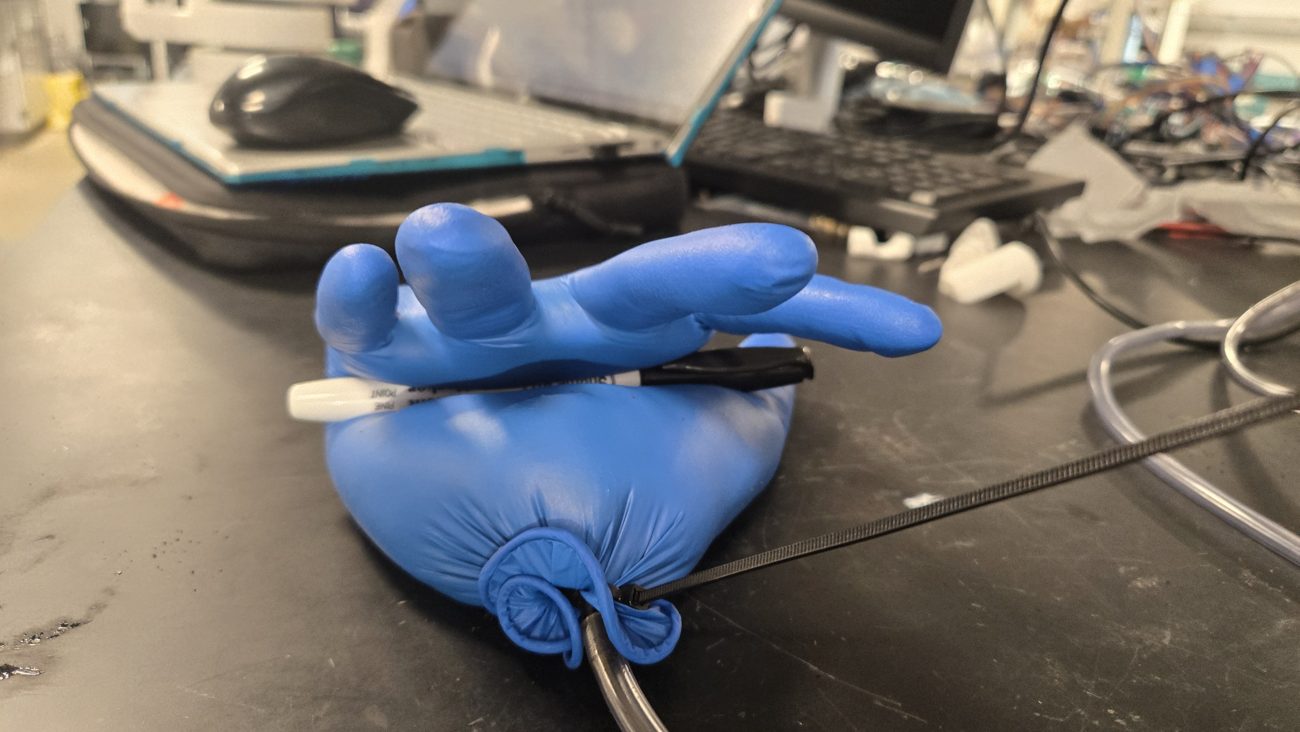
Two tests
Pull-out
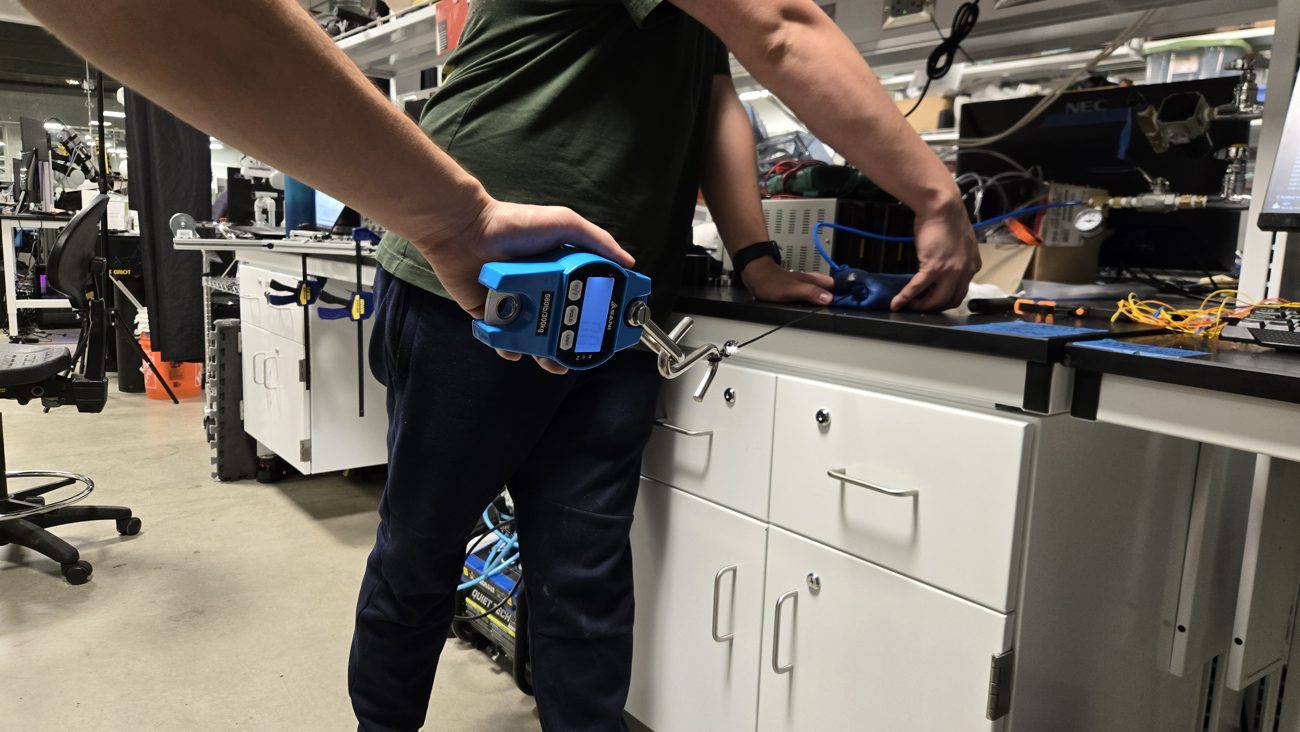
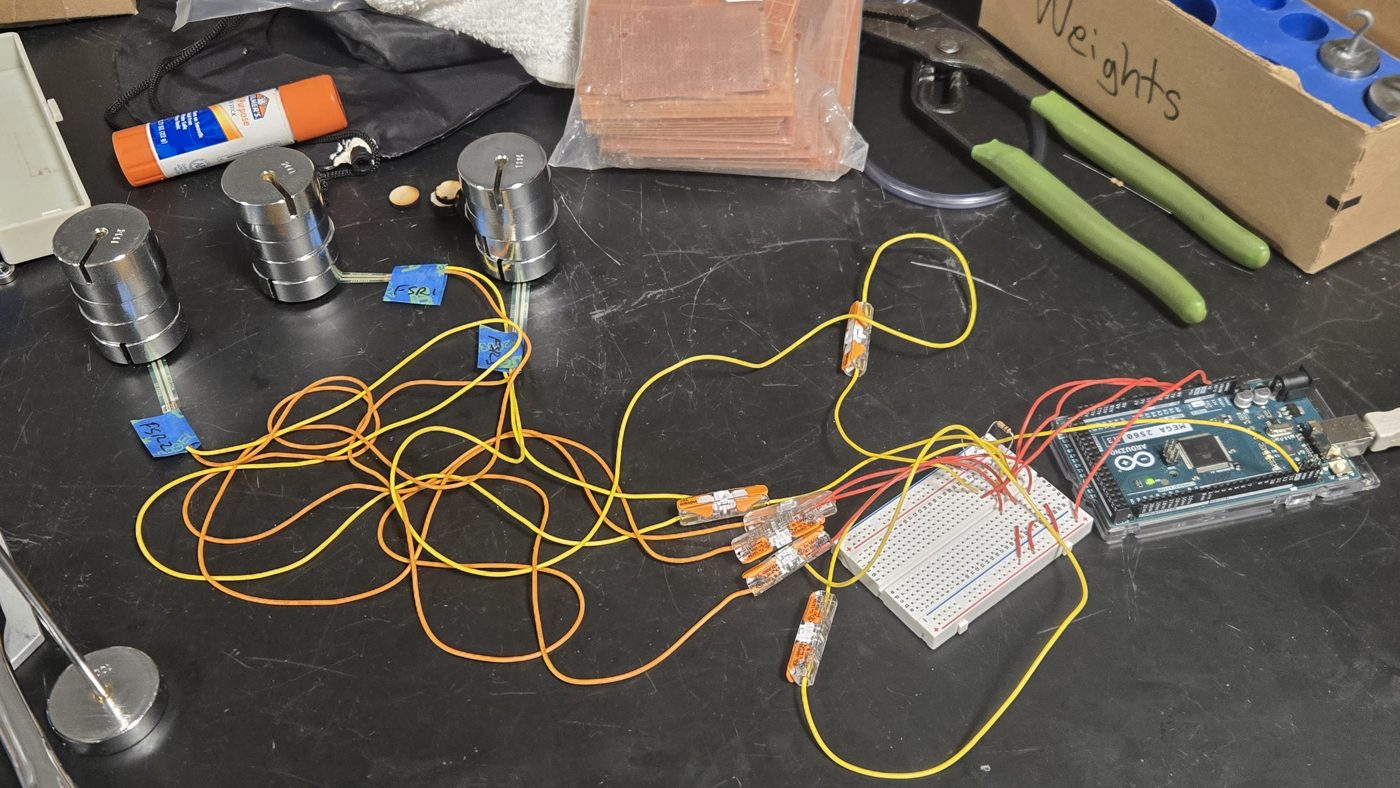
Pull the surrogate out with a crane scale and record the peak force. The strap baseline was tensioned with hanging masses at three preloads, so its resistance could be compared like for like.
Load spread
Three force-sensing resistors under the contact region, read through voltage dividers on an Arduino. I calibrated each at 100, 200, and 300 g, with piecewise curves and a simple drift correction.
Results
The jammed pad beat the strap at every preload. The strap tended to dig into the foam and slip suddenly, while the pad let go smoothly.
Peak pull-out force, strap against jamming pad:
- At a 0.3 kg strap preload: 39 N against 157 N (4.0×)
- At 0.6 kg: 147 N against 343 N (2.3×)
- At 1.0 kg: 255 N against 412 N (1.6×)
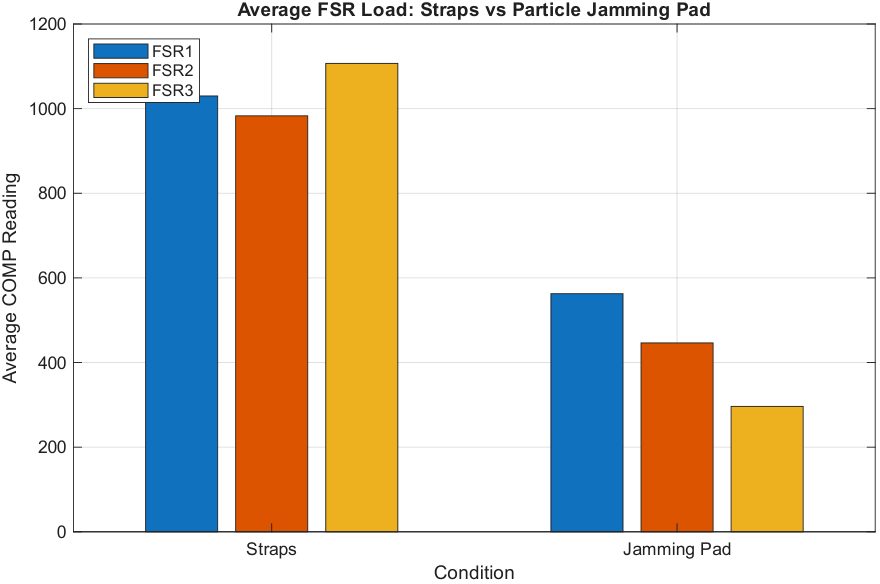
With the strap, nearly all the load landed on one FSR at a time. With the jammer, all three read nonzero.
How far to trust it
The pull-out result is solid. The pressure result is suggestive. The FSRs drifted and disagreed with each other, so a better sensor is the next step. I also learned afterward that fast-acting jamming splints already exist, so the real value was learning the method and building the test setup.